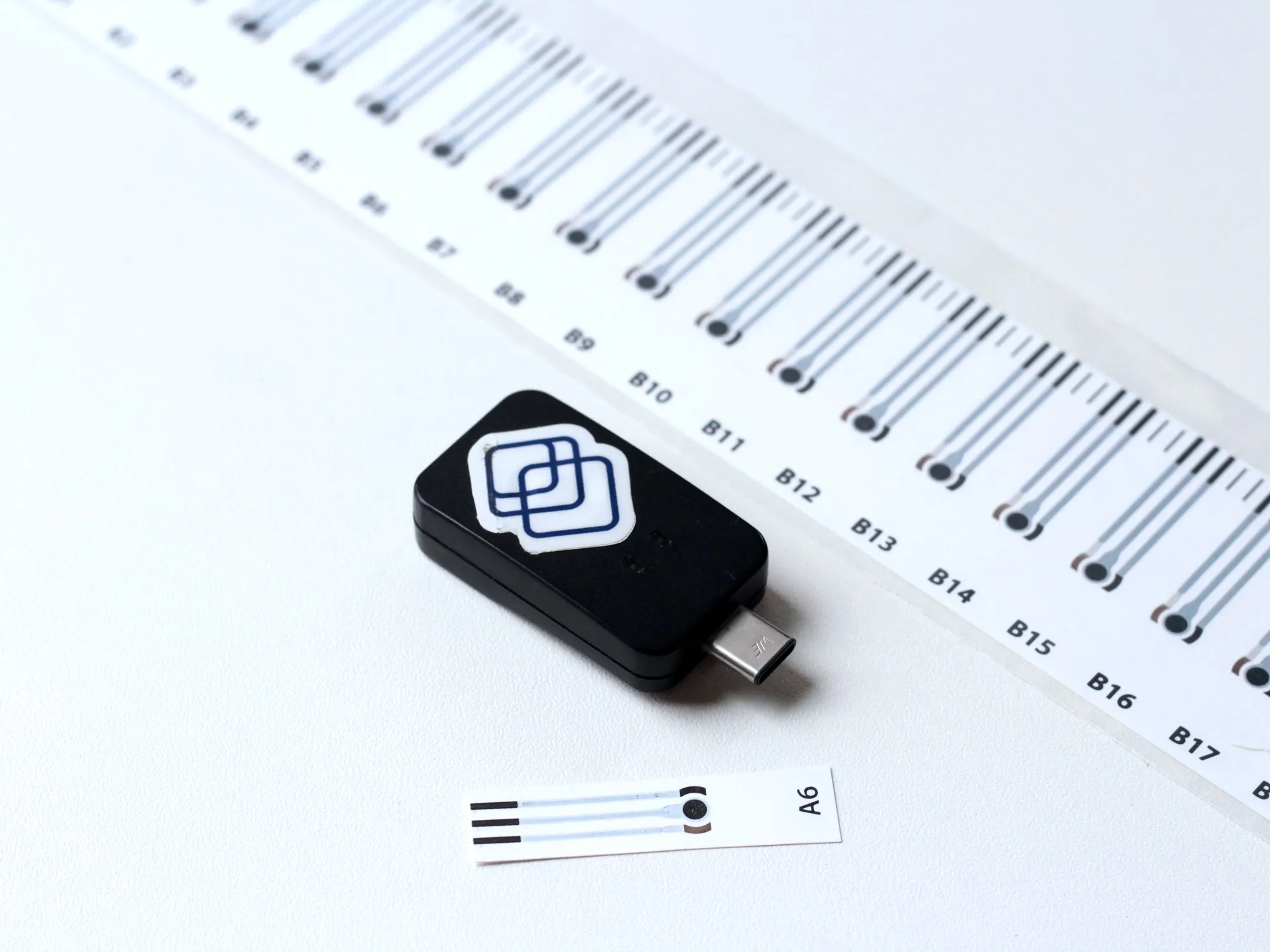
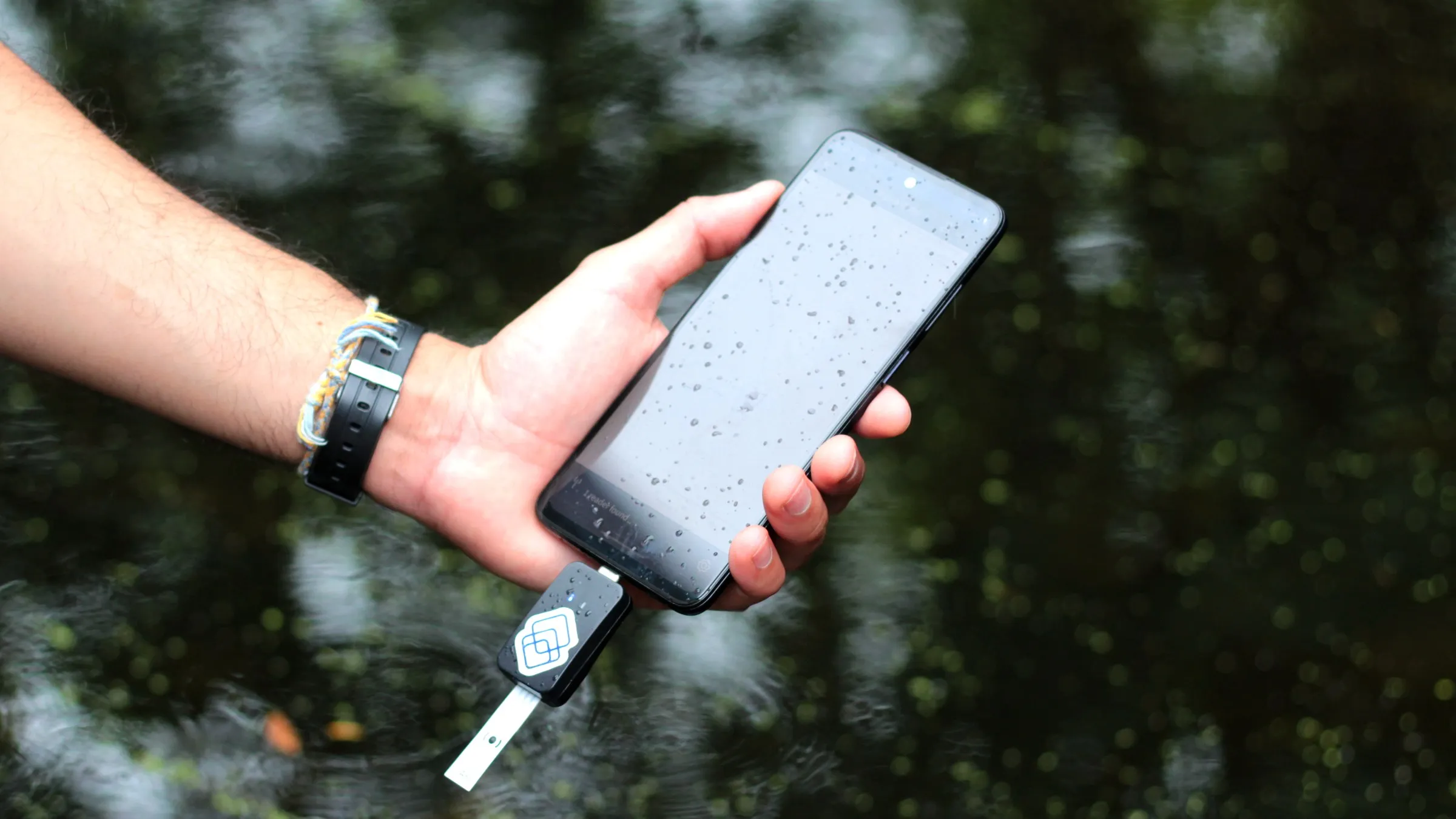
Lab-grade lead and copper detection at the tap — in under five minutes, by any field technician. Replace weeks of lab turnaround with real-time compliance data across your entire network.
Techstars
NYC DEPDept. of Environmental Protection
Water OnlineGuest Column
Centralised lab testing is slow, expensive, and labour-intensive. Samples must be collected, packaged, and couriered by trained staff. A specialist chemist processes each one. Results come back days — sometimes weeks — later. By then, the situation on the ground has moved on.
For utilities and operators, that means more staff hours per sample, higher per-test costs, and monitoring programmes that are too infrequent to be meaningful. As lead limits tighten under the EPA Lead and Copper Rule, the EU Drinking Water Directive, and UK DWI guidance, the compliance gap is growing.
Segura was built to close it.
How Segura solves thisBuilt on Anodic Stripping Voltammetry — decades of proven electrochemical science — reimagined with medical-grade manufacturing.
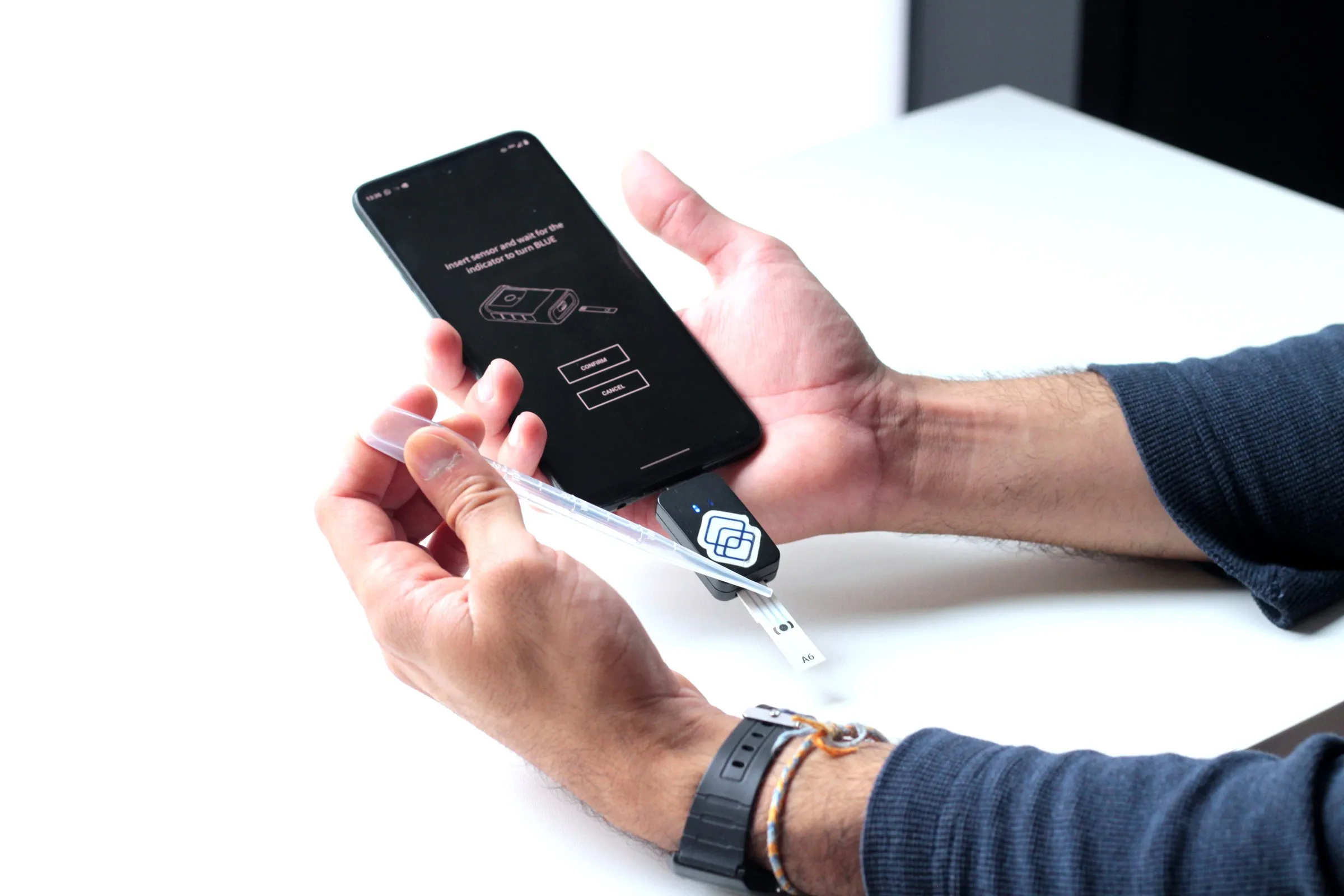
Traditional lab testing was built for a different era. Here's how the two methods compare head-to-head.
Eight steps in a traditional lab workflow. Segura eliminates most of them entirely.
| Step | Traditional Workflow | Segura Workflow |
|---|---|---|
| 1. Sample Collection | Homeowner/utility worker collects sample | Utility worker collects sample |
| 2. Sample Transport | Courier transports to lab (delays, costs) | No transport needed |
| 3. Sample Logging | Lab technician logs and stores sample | Not required |
| 4. Sample Preparation | Lab technician prepares/digests sample | Not required |
| 5. Analysis | ICP-MS operator runs test | On-site |
| 6. Quality Control | QC manager reviews data | Automated calibration in device |
| 7. Reporting | Results entered and sent manually | Automatic cloud upload via app |
| 8. Compliance Review | Utility/regulator interprets results | Immediate results available |
| Total Cost Per Sample | $225 – $560 | $25 – $60 |
| Total People Involved | 8–9 | 1–2 |
| Time to Result | Days to Weeks | < 5 Minutes |
| ✓ Faster, simpler, up to 90% cheaper | ||
Every test your field teams run is automatically synced to the Segura dashboard — GPS-tagged, timestamped, and ready for compliance reporting the moment it's complete.
We're selecting a small number of named pilot partners across utilities, NGOs, consultancies, and construction. Paid pilots — both sides commit, both sides get something real out of it.
We walk through the platform, discuss your use case, and work out whether Segura is the right fit for your sites and sampling programme.
You commit a named technical lead, a defined sampling plan, and the pilot fee. We ship hardware, train your team, support the deployment, and review results together.
If the pilot validates your use case, we move to scale-up pricing, priority access to the commercial platform, and an optional co-branded case study.
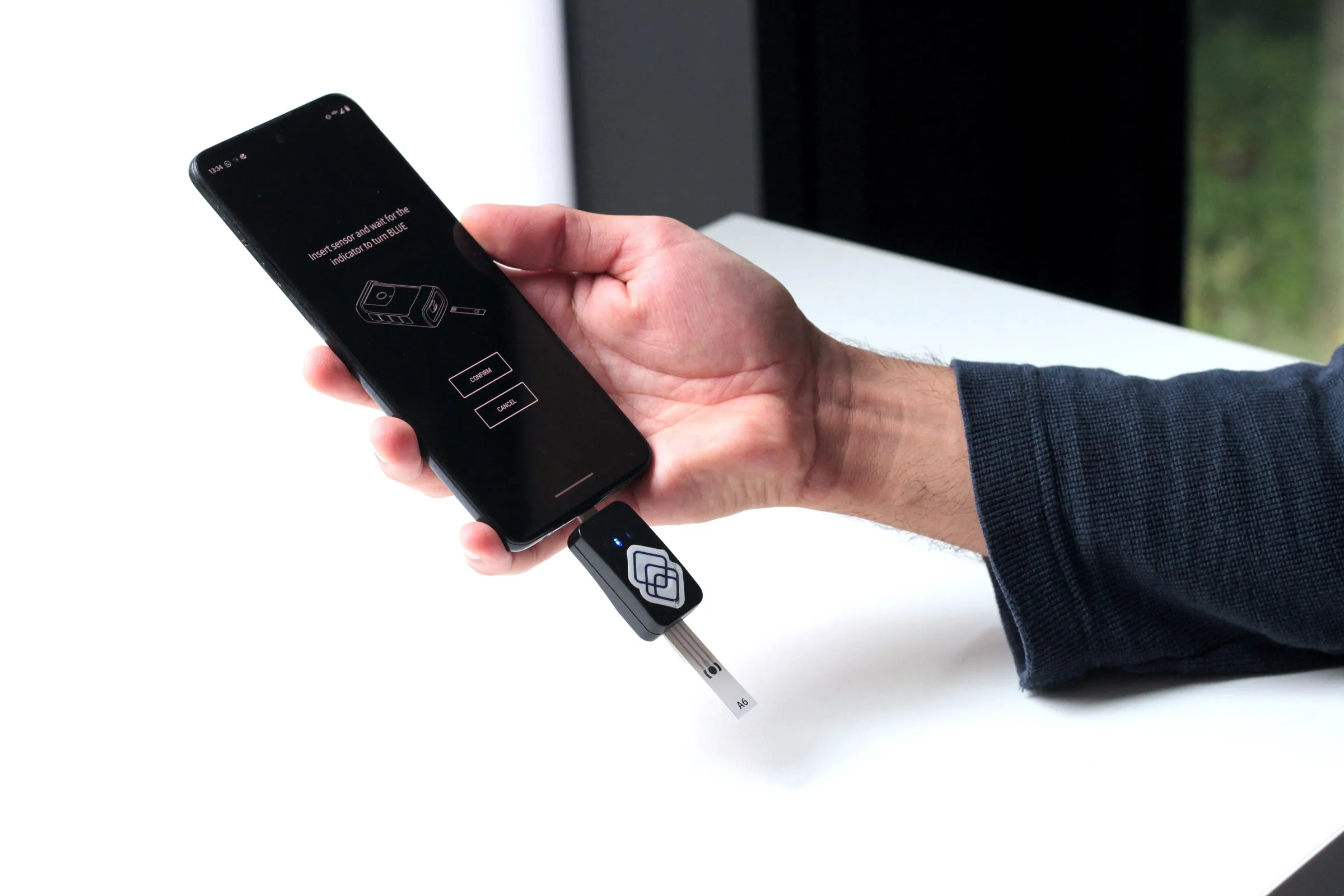
Detecting heavy metals at parts-per-billion concentrations in complex water matrices is analytically hard. ICP-MS requires laboratory infrastructure, trained analysts, and weeks of turnaround. Colorimetric field tests are fast but unreliable below 10 ppb. Neither method provides real-time, on-site data at the point of risk. Segura was built to close that gap.
Independently validated across 200+ real-world water samples — collected from live distribution networks by utility operators themselves and benchmarked against ICP-MS. Mean deviation is less than 8% across the full detection range, from low ppb to ppm. Named institutional partners across the UK, US, and Central America. See the full data ↓
A controlled voltage is applied to the electrode. Heavy metal ions in the water are attracted and deposited onto the electrode surface over 2–3 minutes.
The voltage is reversed and ramped. Each metal ion releases from the electrode at a precisely characteristic potential, generating a distinct current peak.
The position of each peak identifies the metal. The area under the peak gives its concentration — precise to sub-ppb levels.
Pb ⚠
8.4 μg/L detected
Exceeds EU DWD limit (5 μg/L)
Cu
0.8 μg/L detected
Within limits
Anodic Stripping Voltammetry (ASV) is an electroanalytical technique that has been used in trace metal research since the 1970s — often described as the poor man's mass spectrometry. Under laboratory conditions it is capable of detecting metal ions at concentrations as low as parts per trillion, using equipment that fits in a pocket.
Historically, ASV's sensitivity depended on mercury-based electrodes — hanging mercury drop or mercury film — which made the technique a non-starter outside controlled laboratory environments because of mercury's toxicity, handling requirements, and waste disposal constraints. Segura's chemistry is entirely mercury-free and non-toxic, engineered specifically so the same analytical performance can be delivered in a disposable, field-safe format.
The measurement happens in two steps. During the deposition phase, a controlled negative potential is applied to the electrode surface, electrochemically plating dissolved metal ions directly onto the electrode. This pre-concentration step is what gives ASV its sensitivity advantage: metals accumulate over 2–3 minutes, effectively concentrating the signal before measurement begins.
During the stripping phase, the potential is swept positive. Each accumulated metal oxidises and releases from the surface at a characteristic potential — its electrochemical fingerprint. The resulting current peak height is proportional to concentration. Because lead, copper, cadmium, and zinc strip at distinct, well-separated potentials, all four can be co-detected in a single measurement without any separation chemistry.
Segura's proprietary reader interprets that signal on-device in real time — no cloud processing required for a result.
Three analytical approaches exist for heavy metals detection in the field. The differences in sensitivity, multi-metal capability, and matrix tolerance are not incremental — they determine whether a technology is fit for regulatory-grade monitoring.
| Colorimetric Strip tests, Palintest-style |
Chronoamperometry Electrochemical, single-analyte |
ASV — Segura Proprietary multi-metal platform |
|
|---|---|---|---|
| LOQ — lead | ~5–10 ppb | ~2–4 ppb | ✓ 2 ppb validated · 0.1 ppb target (Q2 2026) |
| Upper quantification range | Low, saturates in dirty water | Narrow | ✓ Up to 2 ppm · higher with standard sample dilution |
| Multi-metal panel | No | Single analyte per test | ✓ Yes — simultaneous Pb, Cu, Cd, Zn in one run |
| Pre-concentration step | No | No | ✓ Yes — electrochemical pre-concentration drives sensitivity |
| Affected by turbidity or colour | Yes — results unreliable in turbid or coloured samples | No | ✓ No — electrochemical, not optical |
| Matrix interference suppression | None | Limited | ✓ Proprietary sample preparation step normalises matrix |
| Result time | 2–5 min | 1–3 min | 3–5 min |
| Consumable cost | Low | Medium | Low |
| Regulatory-grade sensitivity (EU DWD 5 μg/L Pb) | No — LOD too high | Marginal | ✓ Yes — validated at sub-regulatory concentrations |
Designed for reliability in the field — not just performance in the lab.
Segura's proprietary test strips use established screen-printing manufacturing processes — adapted and optimised specifically for heavy metals detection in water. The electrode chemistry is mercury-free and non-toxic, replacing the mercury-based electrodes that constrained classical ASV to the lab and unlocking safe, disposable field deployment.
Segura has optimised the sensor design specifically for simultaneous heavy metals detection across diverse drinking water matrices, achieving signal-to-noise ratios sufficient for sub-ppb detection in real field samples.
Test strips are batch-calibrated during manufacturing — the same principle used in consumer blood-glucose test strips. Every strip in a production batch shares the same calibration, characterised against reference materials before the batch ships. Operators never need to prepare daily standards or run calibration curves in the field. Manufactured under ISO 13485-certified processes to ensure batch-to-batch consistency at scale.
Real-world water samples contain a complex mixture of organic matter, particulates, carbonate and phosphate species, and other dissolved metals that can interfere with electrochemical measurements. Without controlled sample preparation, metal speciation, background current, and calibration validity all shift between sample types — producing results that are unreliable across different water sources.
Segura's proprietary measurement protocol incorporates a defined sample preparation step that normalises the measurement environment. This ensures that background interferences are suppressed, regardless of whether the sample is municipal tap water, groundwater, process water, or surface water.
This matrix normalisation step is what allows Segura's calibration to remain valid across different water matrices without recalibration for each new source — a critical requirement for any field-deployable analytical device used across multiple sites.
Raw voltammetric data from a stripping experiment contains signal from multiple sources: the Faradaic current from metal stripping, capacitive background current from the electrode double layer, and electronic noise. Separating the analytical signal from these background contributions is where much of the precision is won or lost.
Segura's proprietary on-device processing pipeline isolates the analytical signal from background noise, producing clean peaks whose position identifies the metal and whose height is proportional to concentration. Quantification is performed on-device in real time — no cloud processing is required for a result, ensuring full functionality in areas with limited or no connectivity.
Results are then GPS-tagged, timestamped, and queued for automatic sync to the Segura cloud dashboard when connectivity is available — building a complete, auditable compliance record with no manual data entry.
Segura's analytical performance has been confirmed across multiple independent programmes — in laboratories, in the field, and against named reference methods. Key validated programmes include:
NYC Bureau of Water Supply — Initial pilot deployment demonstrated sample-to-result turnaround of under 5 minutes (versus weeks for lab testing). Early signs of multi-metal detection capability in distribution network samples; the programme concluded with a smaller sample count than planned and is being built on in our current partner cohort.
Independent ICP-MS benchmarking — Segura's accuracy has been benchmarked against ICP-MS across 200+ real-world samples collected from live distribution networks by utility operators themselves. Samples span municipal, borehole, and surface water matrices. Mean deviation is less than 8% across the full detection range, from low ppb to ppm concentrations. Lab-side reference measurements were carried out in collaboration with Dr. Saskia Nowicki at the University of Oxford's School of Geography and the Environment — a water-quality researcher whose prior work spans the World Health Organization, the UK Department for Environment, Food and Rural Affairs (Defra), and SRK Consulting. Dr. Nowicki also advises Segura and is a shareholder in the company — disclosed here for full transparency.
Wadham College, University of Oxford — First real field demonstration, carried out with interested Wadham College staff. This early deployment confirmed that the device and workflow behaved as designed outside the development bench.
USAID-supported programme, Lake Atitlán, Guatemala — Real-world heavy metals surveillance in a developing-world context with no fixed lab infrastructure.
Request a live demonstration with your water samples — in the lab or in the field.
Request a DemoFrom municipal water utilities to humanitarian field operations — Segura is built for the people who need answers fast and can't wait days for a lab result.
Each sector has its own deployment model, regulatory regime, and pain points. Jump straight to the one that fits.
Any field technician. One day. Four steps. The same simple setup powers every application below.
Tightening regulations under the EPA Lead and Copper Rule and EU Drinking Water Directive demand more testing at more points — but centralised lab economics make that impossible at scale. Segura puts testing in the hands of existing field crews, no chemistry background required.
Brownfield development and pipeline replacement projects live or die by the speed of environmental sign-off. When lab results take days or weeks, decisions stall, costs inflate, and schedules slip. Segura gives site crews a reliable answer while they're still on site — no specialist technician needed.
The WHO estimates lead exposure accounts for over 900,000 deaths annually — yet lab infrastructure is absent across much of the developing world. UNICEF and the World Bank have identified affordable field-portable testing as critical. Segura changes that equation: community health workers can be fully operational after a half-day training session.
Strict discharge limits under the UK Water Industry Act and EPA NPDES permits mean a single breach can trigger enforcement action and production shutdowns. Segura lets your EHS team take ownership of monitoring — increasing frequency and cutting contractor dependency.
An honest view of where we have active pilots today and where we're selecting partners next. We don't claim sectors we haven't served.
Tell us about your testing challenge — we'll tell you honestly whether we're the right solution.
Start a conversationSegura was founded on a simple conviction: the tools to keep water safe shouldn't be locked inside laboratory buildings. We're making precision water testing accessible to anyone who needs it — anywhere in the world, aligned with UN Sustainable Development Goal 6.
Heavy metal contamination in drinking water is a solvable problem. We have the science. We have the chemistry. What's been missing is a tool that works outside the laboratory. The WHO and The Lancet Commission on Pollution and Health have both identified heavy metal exposure as one of the most preventable environmental health crises of the 21st century.
Today, a water utility in a mid-sized UK city might send 200 samples a year to a lab and wait days for results. A community in Zambia may never test their borehole water at all. Both situations are unacceptable — and both are solvable with the right technology.
Segura exists to close that gap: making the gold standard of heavy metal detection portable, affordable, and operable by anyone.
We will never ship a product that doesn't meet a clear, independently validated accuracy standard. Overconfident claims in water testing cause real harm — regulators act on data, communities trust results. We take that seriously.
If it requires a chemistry PhD to operate, we've failed. Every design decision is made with the field worker, the utility engineer, and the NGO health worker in mind — not the laboratory researcher who already has ICP-MS.
No technology does everything. We are transparent about where Segura performs well and where it doesn't. We will always tell a prospective customer if our product isn't the right fit for their application.
Segura was founded by an Oxford-trained scientist whose interest in Anodic Stripping Voltammetry — a decades-old electrochemical technique — began while at the University of Oxford, long before Segura existed as a company. Before turning to the water sector, he spent time in the glucose-monitoring industry — working on disposable electrochemical sensors at Masimo Labs — which gave him a first-hand grounding in medical-grade manufacturing, disposable sensor design, and the engineering realities of shipping a product that real people rely on. All of Segura's chemistry, sensor design, and signal processing is foreground intellectual property, developed independently within the company.
What struck our founder wasn't the science itself — that was mature. It was the gap between what was technically possible and what was deployed in the real world. The instruments existed in research labs. The knowledge existed. But a water engineer in Oxfordshire couldn't use them, and a health worker in sub-Saharan Africa certainly couldn't. The disposable glucose strip — a miracle of cheap, reliable, everyday electrochemistry — was the missing analogy: heavy metals should work the same way.
Segura is the bridge: taking an idea from the academic electrochemistry literature and engineering it — as new, proprietary IP — into a platform that a field worker can use on a Monday morning with no PhD required.
The first working prototype was built in 2023 and has been iterating towards commercial scale ever since, with initial pilot work carried out alongside water utility partners in Oxfordshire and early field demonstrations run from Wadham College, University of Oxford, supported by Dr. Saskia Nowicki — a water-quality researcher at the University of Oxford, Segura advisor, and shareholder in the company.
A Segura pilot is a paid, fixed-scope partnership — typically three months, a named technical lead on your side, and a defined sampling plan at your sites. We provide the hardware, training, ongoing technical support, and a joint data review at the end. You commit the pilot fee, the samples, and honest feedback.
Segura is not currently available for sale to individuals. Our platform is designed for water utilities, environmental consultancies, and field teams. We aim to make it available for individual use in the future.
Independent validation across 200+ real-world samples — collected from live distribution networks by utility operators themselves and benchmarked against ICP-MS — shows less than 8% mean deviation across the full detection range. The US EPA accepts ±15% variation for approved methods, so Segura sits comfortably inside that envelope across the range. Our current development target is less than 5% mean deviation at the limit of detection.
Our current field-validated limit of quantification (LOQ) is 2 ppb for lead, demonstrated in real distribution network samples against ICP-MS — well below the EU DWD regulatory threshold of 5 ppb. Active development work is on target to reduce this to 0.1 ppb by end of Q2 2026. At the upper end, the platform quantifies reliably up to 2 ppm in a single measurement; higher concentrations remain accessible via standard sample dilution. Unlike colorimetric strip tests, turbidity and sample colour do not affect results because the measurement is electrochemical rather than optical.
No field calibration. Segura test strips are batch-calibrated during manufacturing — the same principle used in consumer blood-glucose test strips. Every strip in a production batch is characterised against reference materials before it ships, so the operator never needs to prepare daily standards, run calibration curves, or handle toxic reagents in the field.
The core panel detects lead (Pb), copper (Cu), cadmium (Cd), and zinc (Zn) simultaneously in a single measurement. Additional analytes including arsenic, nickel, mercury, and selenium are in the pipeline.
Under five minutes from sample to result, including sample preparation. Results are GPS-tagged and automatically synced to the cloud dashboard.
No. The device is designed so that any field technician can operate it with minimal training — no chemistry background required. Most operators are fully trained within a single session.
Yes. All analysis is performed on-device in real time. Results are stored locally and sync to the cloud dashboard when connectivity is restored.
Segura works with municipal tap water, groundwater, surface water, and process water. The measurement protocol incorporates a sample preparation step that normalises background interferences across different water matrices.
Segura is headquartered in Oxford, United Kingdom, with roots in the University of Oxford's Geography Department. The company was founded in 2023.
The dashboard supports reporting formats for UK DWI, US EPA (Lead and Copper Rule), and EU Drinking Water Directive requirements. Export-ready compliance reports are generated with one click.
EPA certification and MCERTS accreditation are both in progress. Segura is currently suitable as a screening tool — flagging exceedances for lab confirmation. Many utilities use it to prioritise which samples to send for formal ICP-MS analysis, dramatically reducing unnecessary lab submissions.
Pricing depends on testing volume. Please get in touch for a quote tailored to your deployment.
Whether you're a water utility, an investor, a researcher, or a journalist — we're always open to the right conversations. We're a small team and we respond personally to every message.
Last updated: April 2026
Welcome to Segura. This Privacy Policy explains how we handle your personal data when you visit our website, www.segura-water.com, in compliance with the General Data Protection Regulation (GDPR). We are committed to protecting your privacy and handling your personal data responsibly.
We collect and process the following types of personal data:
We process your personal data for the following purposes:
We rely on the following legal bases to process your personal data:
We do not sell your personal data. However, we may share your data with:
If we transfer personal data outside the European Economic Area (EEA), we ensure that adequate safeguards are in place.
We retain your personal data only as long as necessary for the purposes outlined above or as required by law. Usage data may be anonymised and retained for a longer period for analysis purposes.
You have the right to:
To exercise these rights, please contact us at operations@segura-water.com.
Our website uses cookies to enhance user experience and collect usage data. You can adjust your browser settings to refuse cookies, but this may impact certain website functionalities.
We implement technical and organisational measures to protect your data against unauthorised access, loss, or misuse.
If you have questions about this Privacy Policy or our data practices, please contact us:
Segura Water Ltd
3rd Floor, 86–90 Paul Street
London EC2A 4NE, United Kingdom
operations@segura-water.com
+44 (0)7878 167745
We may update this Privacy Policy from time to time. Any changes will be posted on this page, and we will notify you if significant changes are made.
Last updated: April 2026
These Terms of Use ("Terms") govern your access to and use of the Segura Water Ltd website at www.segura-water.com (the "Site"). By accessing or using the Site, you agree to be bound by these Terms. If you do not agree, please do not use the Site.
The Site is operated by Segura Water Ltd, a company registered in England and Wales, with its registered office at 3rd Floor, 86–90 Paul Street, London EC2A 4NE, United Kingdom. References to "we", "us", and "our" refer to Segura Water Ltd.
The Site is provided for general information about Segura Water Ltd, our products, and our services. You may use the Site for lawful purposes only. You agree not to:
All content on the Site — including text, graphics, logos, images, product renders, voltammetric charts, and the compilation thereof — is the property of Segura Water Ltd or its licensors and is protected by copyright, trademark, and other intellectual property laws. You may view, download, and print content from the Site for your personal, non-commercial use. Any other use requires our prior written permission.
"Segura", the Segura logo, and related product names are trademarks of Segura Water Ltd. You may not use them without our written consent.
Information on the Site about Segura's products, validation data, detection capabilities, and performance specifications is provided for general information purposes. While we take care to ensure accuracy, technical specifications and regulatory status may evolve. Segura's products are intended for use by trained water-testing professionals, utilities, and authorised partners — they are not currently sold for individual consumer use.
Segura's platform is a screening tool designed to support, not replace, laboratory confirmation where regulatory certification is required. Always consult the current product documentation and your applicable local regulatory guidance before relying on any result for compliance decisions.
The Site contains links to third-party websites (including academic papers, regulatory bodies, news coverage, and partner organisations). These links are provided for convenience and information only. We have no control over the content of those sites and accept no responsibility for them or for any loss or damage arising from your use of them.
The Site and its content are provided on an "as is" and "as available" basis. To the fullest extent permitted by law, we make no representations or warranties of any kind, express or implied, about the completeness, accuracy, reliability, suitability, or availability of the Site or the information contained on it. Any reliance you place on such information is strictly at your own risk.
Nothing in these Terms excludes or limits our liability for death or personal injury arising from our negligence, fraud or fraudulent misrepresentation, or any other liability that cannot be excluded or limited under English law.
Subject to the above, we will not be liable to you for any loss or damage — whether in contract, tort (including negligence), breach of statutory duty, or otherwise — arising under or in connection with use of, or inability to use, the Site, including but not limited to loss of profits, loss of business, business interruption, or loss of business opportunity.
Your use of the Site is also governed by our Privacy Policy, which explains how we collect and handle your personal data in compliance with the General Data Protection Regulation (GDPR).
We may update the Site and these Terms from time to time. We will post any updated version on this page. By continuing to use the Site after changes are posted, you accept the revised Terms.
These Terms, and any dispute or claim arising out of or in connection with them or the Site, are governed by and construed in accordance with the laws of England and Wales. You agree that the courts of England and Wales have exclusive jurisdiction to settle any such dispute or claim.
If you have any questions about these Terms, please contact us:
Segura Water Ltd
3rd Floor, 86–90 Paul Street
London EC2A 4NE, United Kingdom
operations@segura-water.com
+44 (0)7878 167745